Ridge House
A modern hillside residence designed to frame mountain views while minimizing environmental impact.
Client
Eleanor & James Carter
Type
Residential Architecture
Location
Aspen
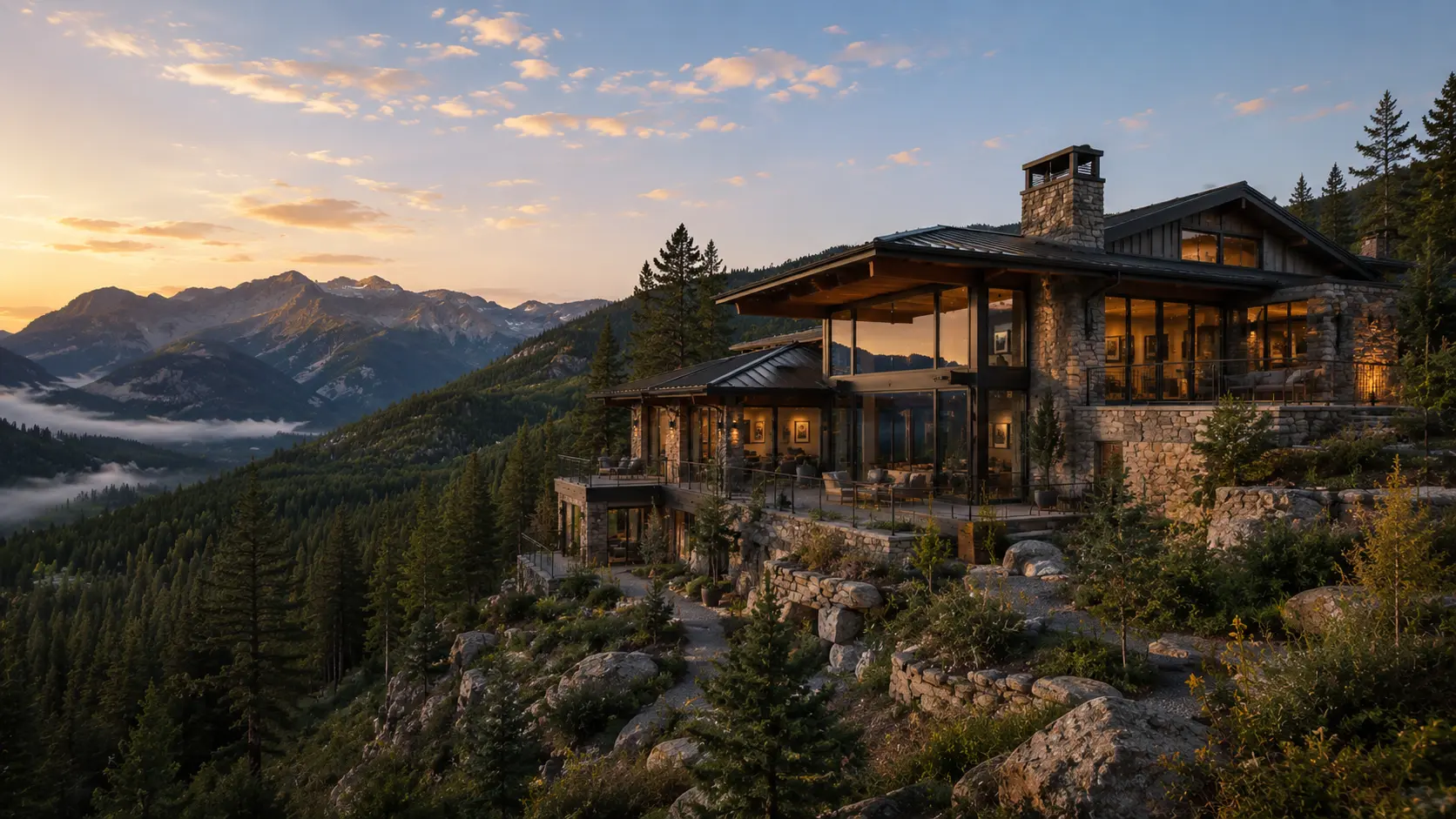
Ridge House is a contemporary mountain residence designed to sit quietly within the natural terrain while offering expansive views of the surrounding alpine landscape. The project explores the relationship between architecture and topography through carefully integrated volumes, warm natural materials, and a spatial experience centered around light, openness, and seasonal living. The residence was conceived as both a private retreat and a long-term family home capable of adapting to changing needs over time.
Beginning
The clients approached the studio with a vision for a home that would feel calm, grounded, and deeply connected to nature. Rather than creating a highly expressive architectural object, the ambition was to design a residence that respected the scale and character of the mountains while delivering comfort, durability, and contemporary functionality.
Early conversations focused heavily on lifestyle and atmosphere. The family wanted large communal areas for gatherings, quieter private spaces for retreat, and strong visual connections between interior living areas and the landscape beyond. Sustainability also became a key priority from the earliest planning stages, influencing everything from orientation and material selection to insulation strategy and energy performance.
Site
The site occupied a steep ridge overlooking a protected forest valley with uninterrupted western views toward the mountains. Its dramatic elevation changes presented both opportunities and technical challenges throughout the design process.
Snow accumulation, wind exposure, and difficult access conditions required extensive site analysis and careful structural planning. Rather than flattening the terrain, the design strategy embraced the natural slope by stepping the building into the landscape. This minimized excavation while preserving existing vegetation and reducing the visual impact of the structure from surrounding viewpoints.
Seasonal sunlight studies informed the orientation of the main living spaces, allowing winter light to penetrate deep into the interiors while shaded overhangs reduced heat gain during summer months.
Design
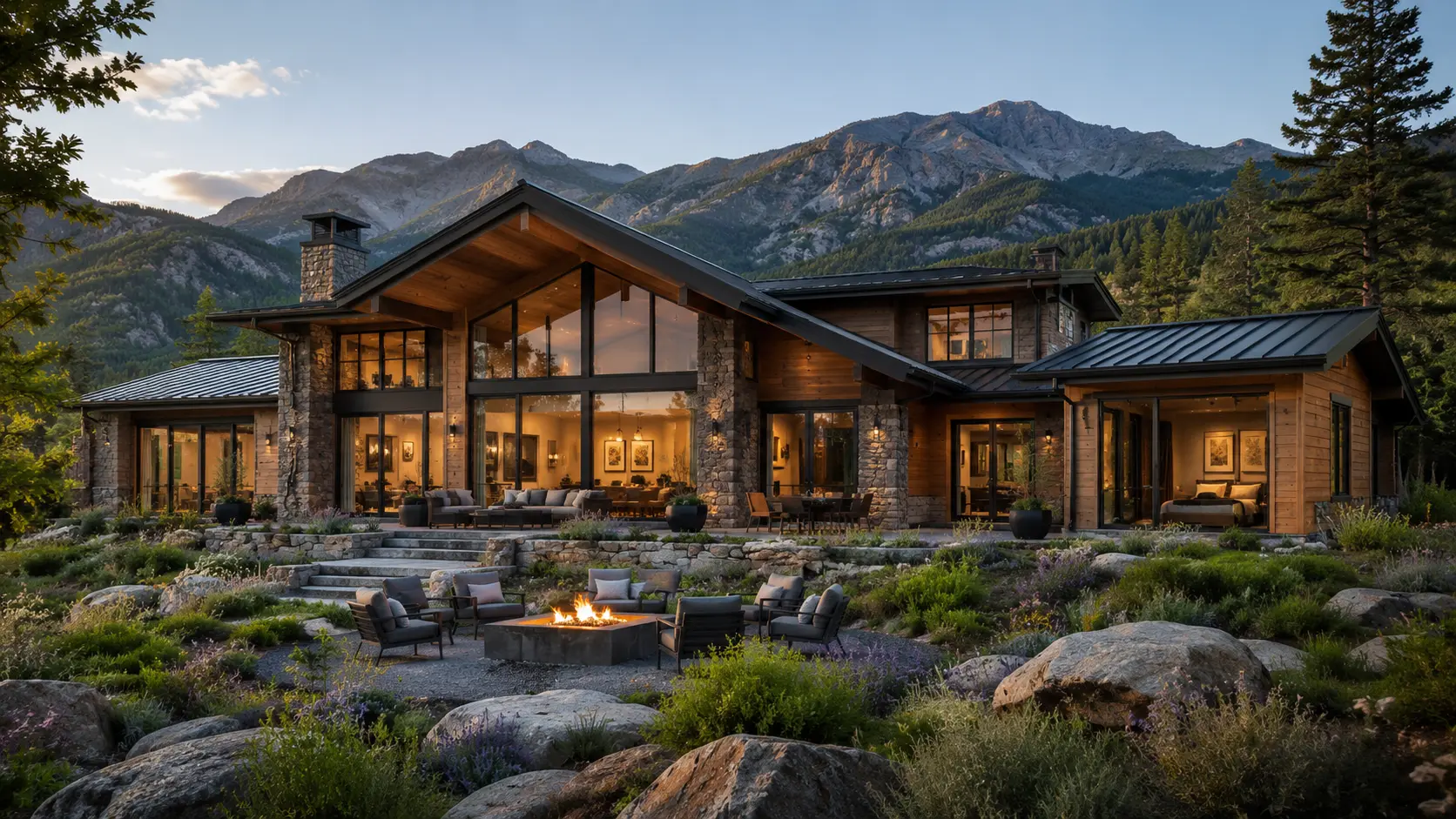
The architecture was developed as a series of interconnected volumes positioned along the ridge line. Natural stone bases anchored the structure to the terrain while upper timber-clad forms softened the visual presence of the building against the surrounding forest.
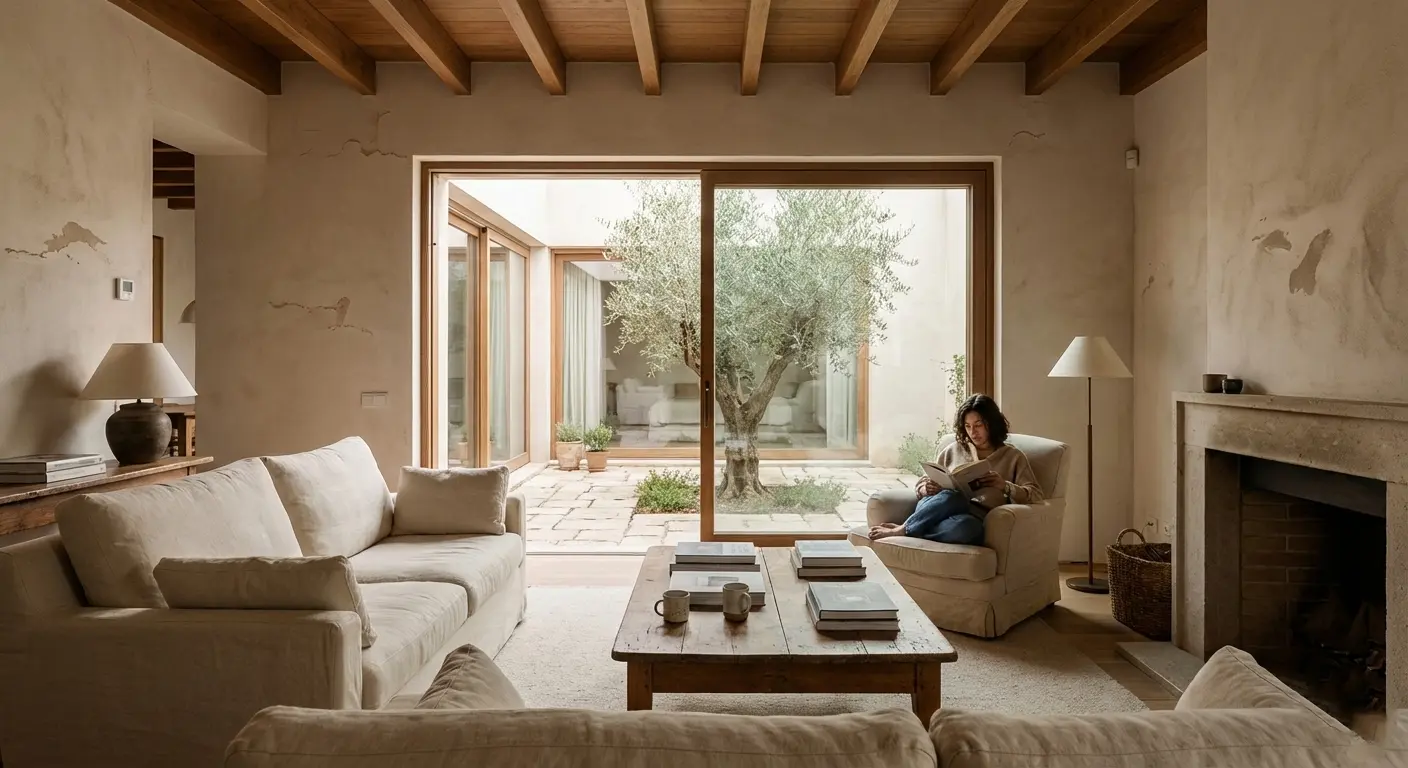
Inside, the home was organized around a double-height living and dining space that acts as the social center of the residence. Large floor-to-ceiling glazing frames panoramic mountain views while maintaining a restrained and minimal interior atmosphere. Material choices focused on warmth and longevity, combining oak flooring, textured plaster, darkened steel, and locally sourced stone.
Circulation throughout the house was designed to feel gradual and experiential, revealing framed views and transitions between light and shadow as occupants move through the space. Outdoor terraces, protected courtyards, and covered walkways extend the living experience beyond the interior and allow the home to respond differently throughout each season.
Result
The completed residence achieved a balance between architectural clarity and environmental sensitivity. Its passive heating strategies, high-performance envelope, and carefully integrated building systems significantly reduced long-term energy consumption while maintaining year-round comfort.
Beyond technical performance, the project succeeded in creating an atmosphere of stillness and retreat. The architecture enhances the surrounding landscape rather than competing with it, offering the family a home that feels timeless, resilient, and deeply connected to its environment.