Desert Research Center
Research and education facility designed for extreme climate resilience and environmental integration.
Client
Horizon Environmental Foundation
Type
Institutional Architecture
Location
AlUla
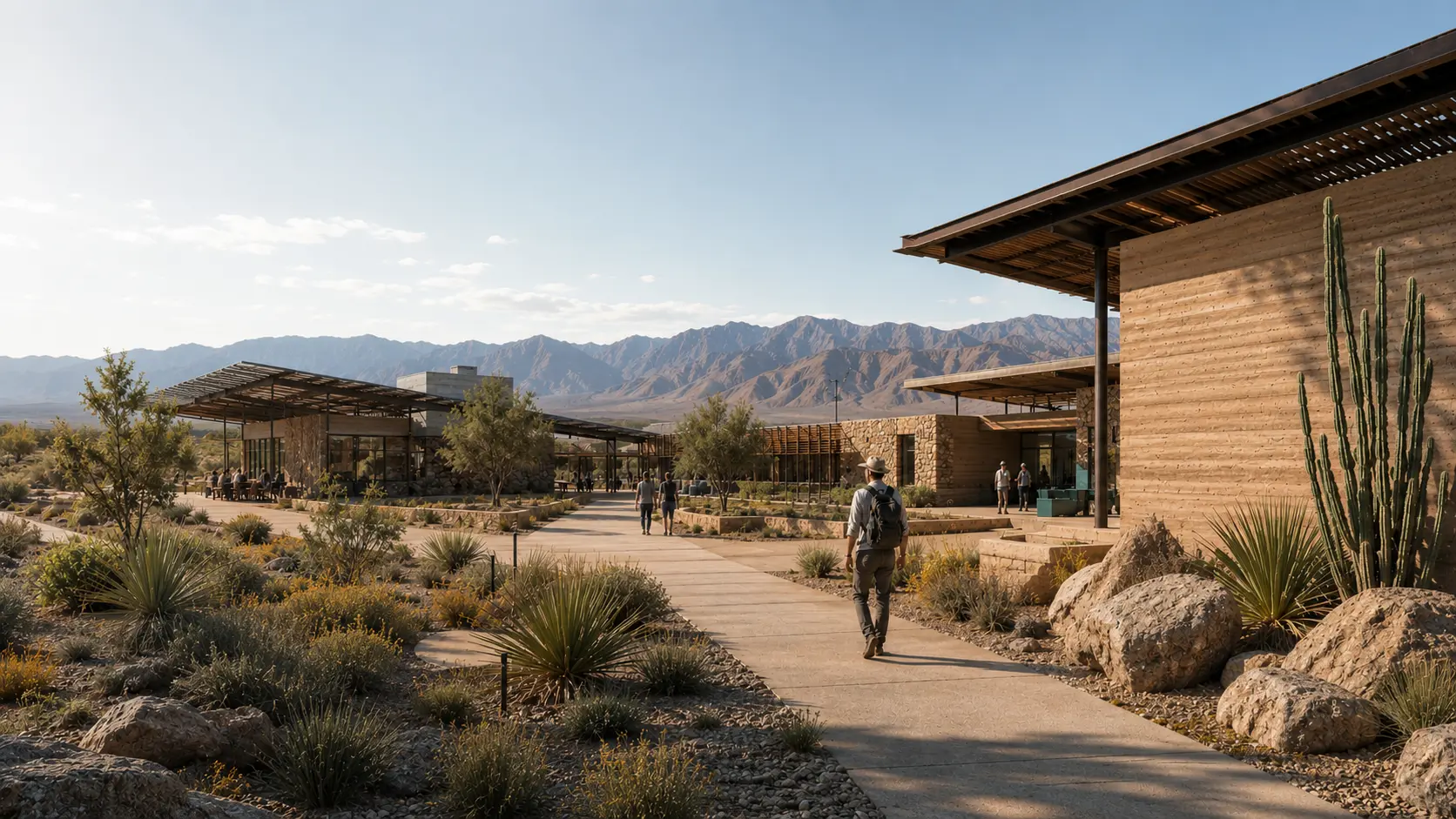
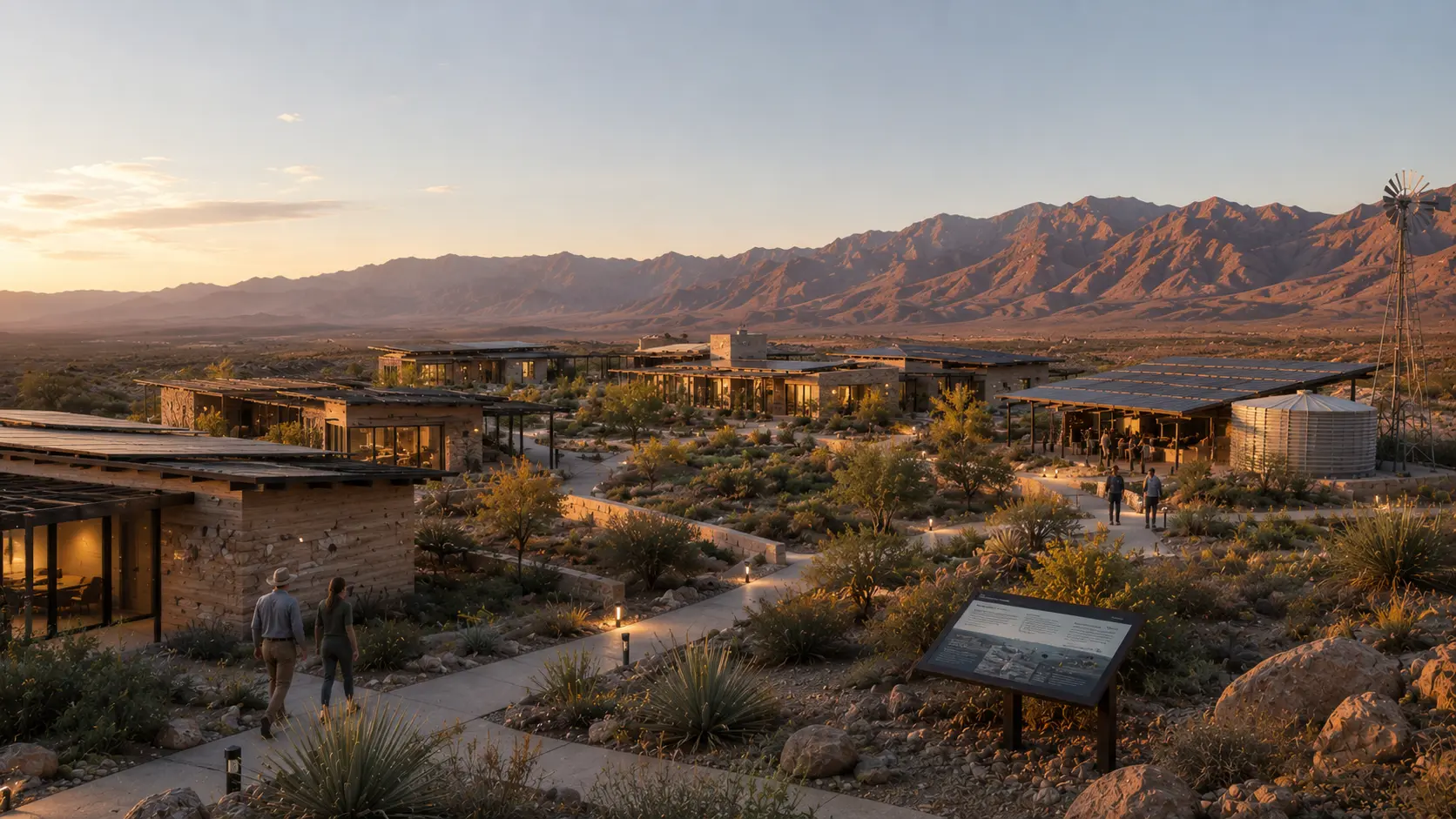
The Desert Research Center is an institutional campus designed to support environmental research, scientific collaboration, and public education within an extreme desert climate. The project combines passive environmental strategies, durable regional materials, and low-impact site planning to create a resilient architectural framework deeply connected to its landscape. The campus serves as both a research facility and a public destination focused on sustainability and ecological awareness.
Beginning
The foundation approached the studio with the ambition of creating a research campus that could operate as a center for environmental innovation while remaining highly responsive to the surrounding desert ecosystem.
From the earliest planning stages, the project emphasized long-term sustainability, climate resilience, and minimal ecological disruption. The architecture was intended not only to house laboratories and educational spaces, but also to communicate environmental responsibility through its physical form and operational performance.
The challenge was to design a facility capable of supporting advanced scientific functions while maintaining a strong emotional and visual connection to the surrounding landscape.
Site
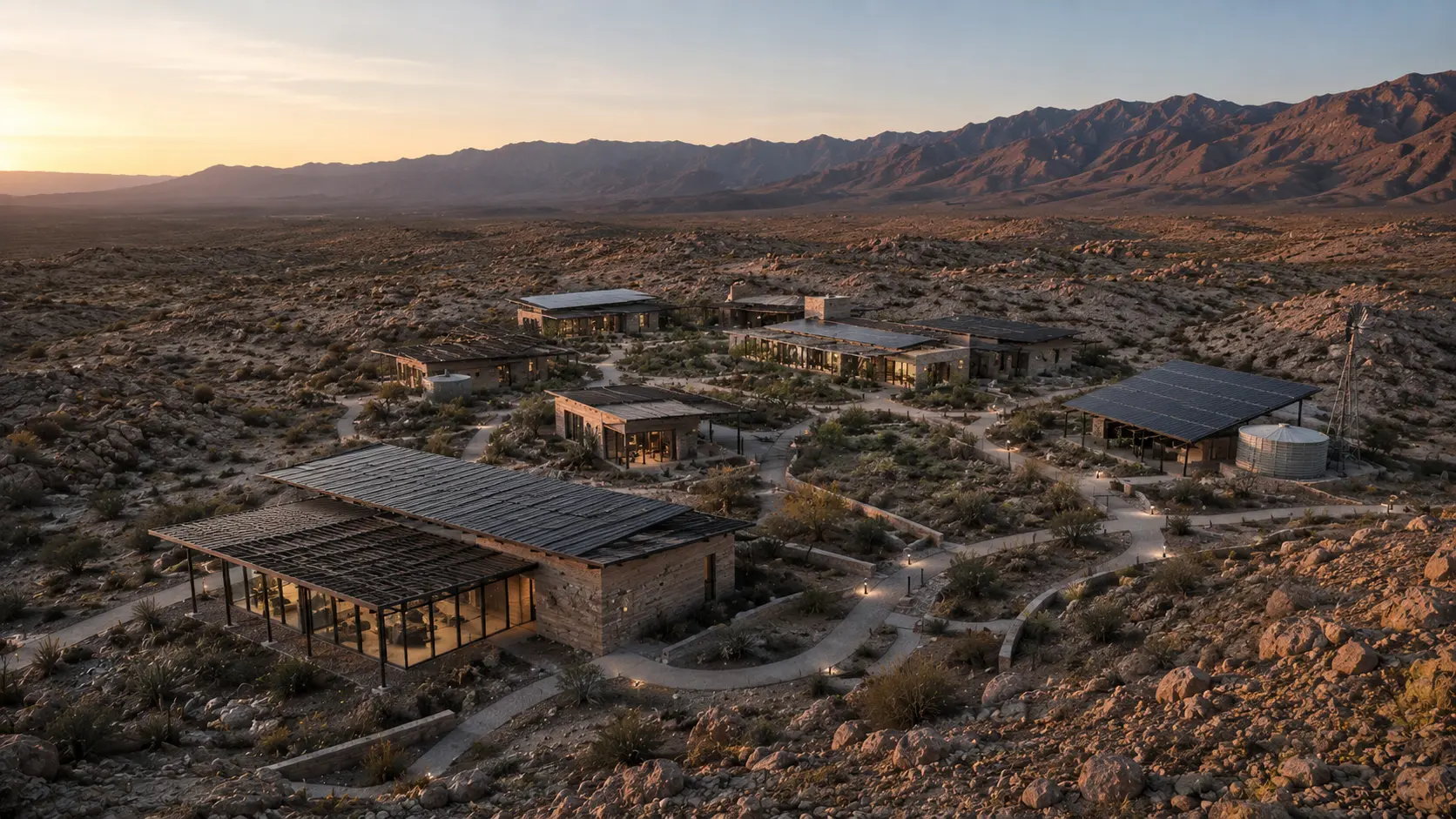
The remote desert site presented extreme environmental conditions including intense daytime heat, cold nighttime temperatures, strong seasonal winds, and minimal vegetation coverage.
Preserving the natural terrain became a major priority throughout the planning process. Rather than imposing a large centralized structure onto the landscape, the campus was broken into smaller interconnected buildings positioned carefully across the site to reduce excavation and environmental impact.
Solar orientation, wind patterns, and seasonal temperature fluctuations were extensively studied to inform building placement and passive cooling strategies.
Design
The architecture utilized compact building forms with thick rammed-earth walls to improve thermal performance and reduce heat gain. Shaded walkways and protected courtyards connected the different research and educational buildings while creating comfortable transitional outdoor environments.
Roof canopies integrated photovoltaic systems that contribute significantly to the campus’s energy requirements. Deep recessed openings and screened facades filtered sunlight while maintaining natural ventilation throughout many of the shared spaces.
Material selection focused heavily on durability and regional relevance. Earth-based construction materials, textured concrete, weathered steel, and locally sourced stone reflected the surrounding geology while minimizing maintenance requirements in the harsh climate.
Public exhibition areas, lecture halls, laboratories, and collaborative workspaces were organized around landscaped courtyards designed to encourage interaction between researchers, students, and visitors.
Result
The completed campus achieved substantial reductions in operational energy demand through passive environmental systems and renewable energy integration. Its low-profile architectural language allowed the buildings to integrate naturally into the desert terrain while maintaining strong institutional identity.
Beyond performance metrics, the project established a meaningful relationship between architecture, science, and landscape. The Desert Research Center now functions as both a working research institution and a public educational destination promoting environmental awareness and sustainable innovation within the region.